
A rectangle pool with tanning ledge looks simple on paper, and that’s the trap. Set the ledge a few inches too deep and your in-pool loungers float away. Put the scupper wall on the wrong side and it faces the neighbors instead of your patio.
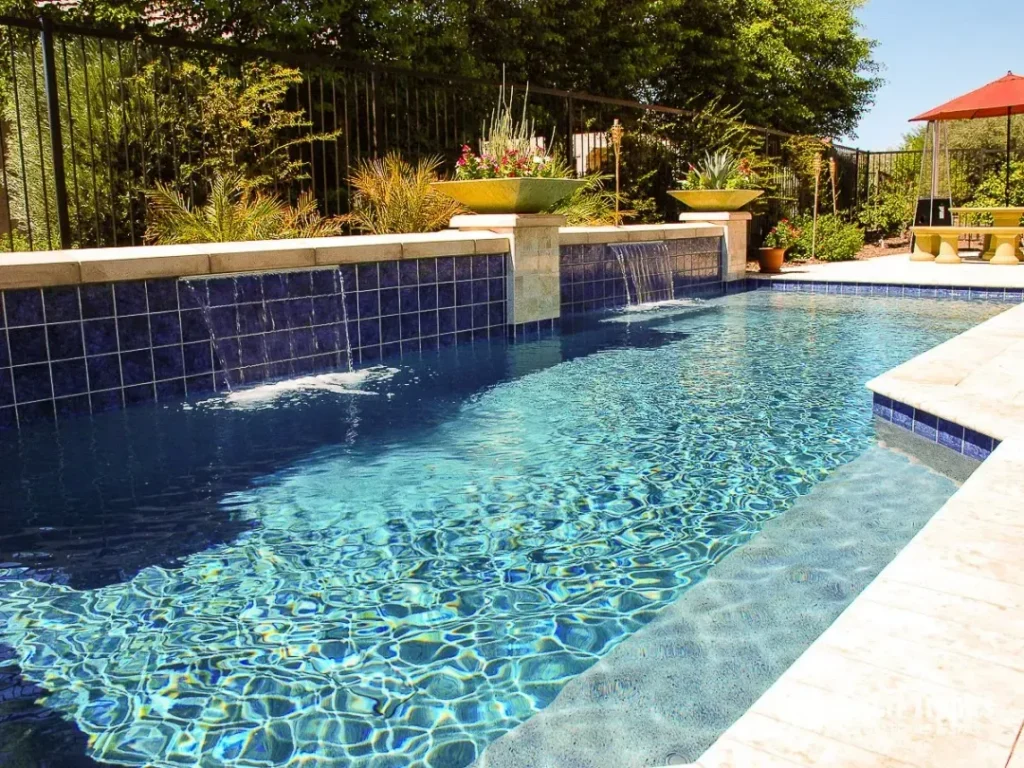
One of our recent Arizona builds paired a rectangle pool with a Baja step and a scupper wall. Here’s what that layout teaches about sizing the ledge, placing the water feature and fitting a straight-sided pool to your lot before construction starts.
Key Takeaways
- A rectangle pool with tanning ledge has a broad, shallow shelf at one end or side, often called a Baja step or sun shelf.
- Set the ledge depth around the furniture you plan to use, because in-pool loungers are rated for specific water depths.
- A scupper wall works best facing the patio or back windows, opposite the ledge, where you’ll see and hear it.
- Straight sides use the full width of a yard, which suits compact subdivision lots and modern homes.
- Shallow water draws small children, so plan barriers and supervision around the ledge from the start.
What Is a Rectangle Pool With Tanning Ledge?
A rectangle pool with tanning ledge is a straight-sided pool with a broad, shallow shelf built into one end or side. The shelf holds a few inches of water, so you can sit, lounge or let kids splash without being in the deeper swimming section of the pool.
Baja step, Baja shelf, tanning ledge and sun shelf all describe the same feature, and the name you hear usually depends on the builder. A Baja step pool and a sun shelf pool give you the same thing: a place to be in the water without swimming. In a rectangular layout, the ledge usually spans one end, which keeps the lines clean and leaves the full length open for laps.
Ledges fit naturally into geometric pool designs, where they’re squared off to match the pool’s proportions and planned during design rather than added later.
How Deep Should a Baja Shelf Be?
A Baja shelf should be deep enough to cool you off and shallow enough that in-pool furniture stays put. The right depth depends on what you’ll set on it, so choose your loungers before the steel goes in, not after the plaster cures. Changing a ledge’s depth later means demolition.
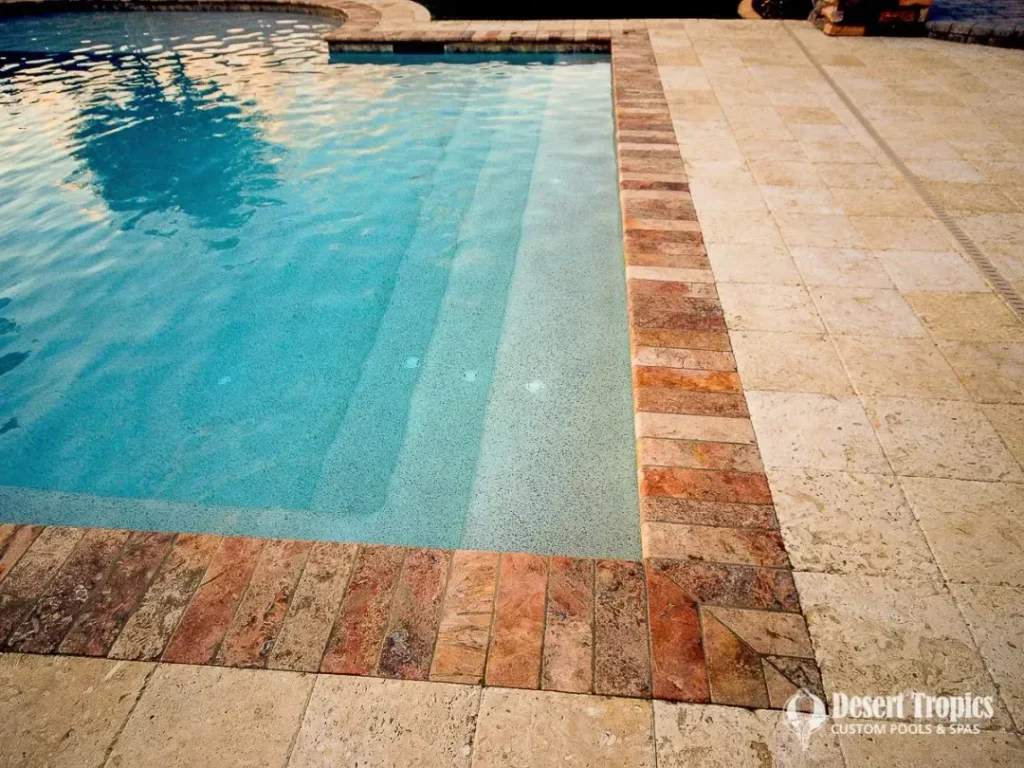
Ledge Lounger explains that its in-pool furniture stays in place because the water inside the product balances the water around it, so a ledge deeper than the rated range makes it bob or float. Its Autograph Chaise, for example, tops out at 12 inches of water. That’s why we ask about furniture early in swimming pool design and show the shelf in 3D renderings before construction begins.
| How you’ll use the ledge | What to plan for |
|---|---|
| In-pool chaise loungers | Water depth inside the lounger’s rated range, plus room for its full length |
| Toddlers and young kids | A shallow sitting depth and a clearly visible step-down to deeper water |
| Shade | An umbrella sleeve set into the ledge before the interior finish |
| Social seating | Enough width for several chairs side by side |
Where Should a Scupper Wall Go on a Rectangular Pool?
On a rectangle pool with tanning ledge, a scupper wall should face the patio and back windows, usually on the far end or long side. Pool scuppers are spouts set into a raised wall that pour pool water back in, so the wall also screens equipment or a neighbor’s view.
Putting the scupper wall opposite the ledge keeps splash away from the loungers and gives people on the shelf something to look at. A scupper water feature runs on the pool’s own water, so it needs flow planned on the equipment side. Run it when you’re outside: the EPA’s WaterSense pool guide notes that surface turbulence from fountains and waterfalls increases evaporation, and recommends a timer.
Is a Rectangular Pool the Right Shape for Your Yard?
A rectangular pool is the right shape when your yard and house have straight lines to match. Straight sides use the full width of a lot, suit modern and transitional homes, and leave room for a lap lane, a ledge at one end and a scupper wall without crowding the deck.
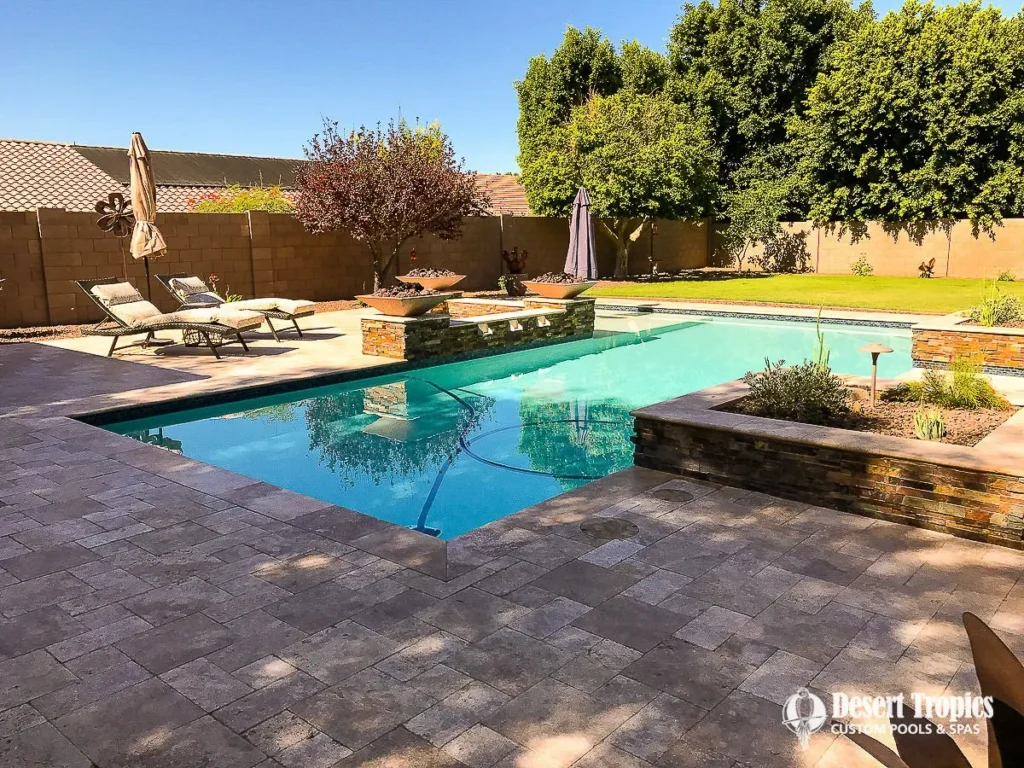
That makes a rectangle pool a practical fit for compact subdivision lots, like those in Peoria’s Fletcher Heights, where every foot of width counts. Our page for pool builders in Peoria covers how HOA setbacks and caliche soil shape a layout. For more clean-lined layouts, browse our modern pool design ideas for Arizona homes.
How Do You Keep a Tanning Ledge Pool Safe for Kids?
Keep a tanning ledge pool safe by treating the shallow shelf as part of the pool, not a separate kiddie area. A small child can step off the ledge into deeper water in a second, so an adult should watch the water whenever kids are near it, and barriers should keep them out when no one is.
The CPSC’s 2026 drowning report found that drowning is the leading cause of death for children ages one to four, and that over 70 percent of fatal drownings happened in residential settings. It recommends a designated adult Water Watcher and layers of protection like self-closing, self-latching gates. In the design, ask for a clear visual edge where the ledge steps down, such as a contrasting tile band, so everyone can see where deeper water starts.
Rectangle Pool With Tanning Ledge FAQs
What is a Baja step in a pool?
A Baja step is a wide, shallow shelf inside the pool, usually a few inches to about a foot deep, where you can sit, lounge or set in-pool chairs. It’s the same feature many people call a tanning ledge, Baja shelf or sun shelf, and it often sits at the shallow end next to the entry steps.
Should I put a tanning ledge in my pool?
Add a tanning ledge if you’ll spend more time lounging or watching kids than swimming laps. It gives non-swimmers a place to be in the water and holds in-pool furniture. Skip it or keep it small if your pool is short and you want every foot of length for swimming.
Can you add a tanning ledge to an existing pool?
Yes, during a remodel, by building a shelf inside the existing shell and refinishing the interior. It takes some of the pool’s swimming area and changes the water volume, so the circulation plan needs a check too. Adding one is easiest when the pool is already getting a new interior finish.
How much does a rectangle pool with tanning ledge cost?
Custom pools in the Phoenix area typically start around $60,000 and climb past $100,000 with premium features. The rectangular shape itself doesn’t add much, because size, depth, finishes and features drive most of the price. A ledge, scupper wall and spa each add to that baseline, and your estimate breaks them out.
How long does it take to build a rectangle pool with tanning ledge?
Our custom pools typically take 4 to 5 months from contract to swim day, including about 6 to 10 weeks of design and permitting before excavation. A tanning ledge and scupper wall are formed with the rest of the shell, so they add detail work rather than a separate phase.
Planning Your Rectangle Pool With Tanning Ledge
The decisions that matter most are the ledge depth, which way the scupper wall faces and how the shape fits your lot. Settle those in design, and a rectangle pool with tanning ledge stays simple to build and easy to live with.
Since 2001, we’ve designed custom pools across North and West Phoenix with the owner involved in every project. Call (602) 787-1603 or start your free design consultation and we’ll lay out the ledge, the scupper wall and the rest of your yard in 3D.