
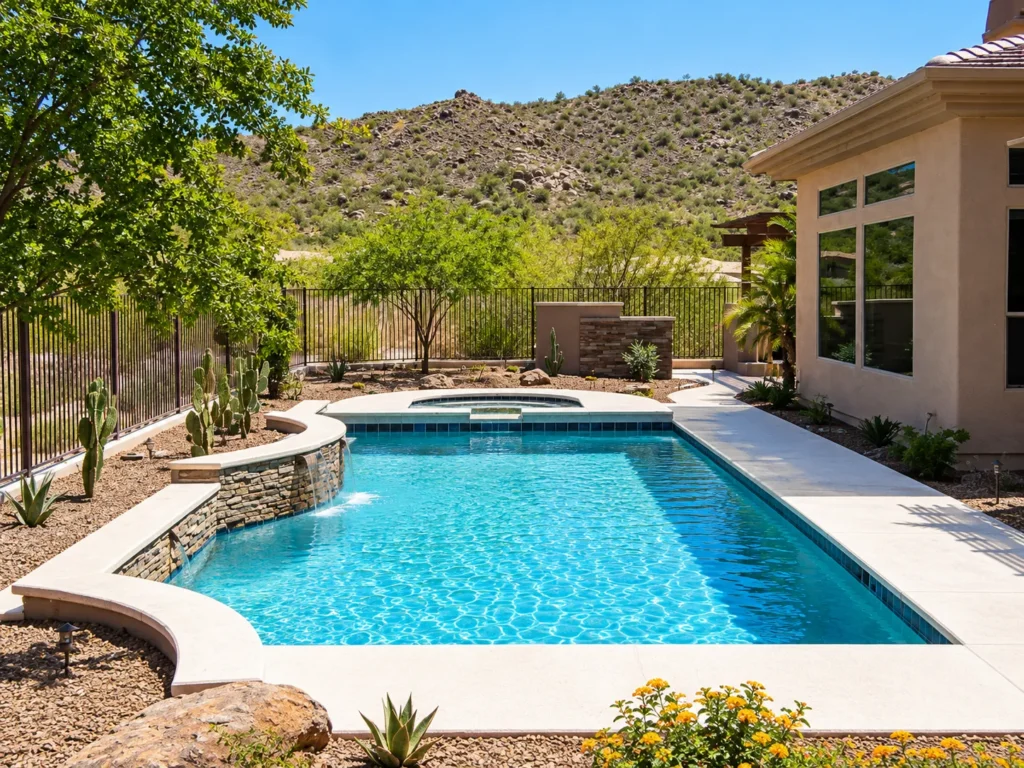
Most advice on choosing inground pool builders in Arizona stops at the sales process: licenses, reviews and the contract. Those matter, but they don’t show you how a builder handles the job site, and that’s where the desert separates good builders from great ones.
Caliche under the yard, triple-digit days during the shell spray, monsoon storms and equipment that runs hard for months all test how a pool gets built. Here’s what a great builder does at each of those points, and the questions that show you whether yours will.
Key Takeaways
- Great inground pool builders in Arizona study the site first, because soil, access and drainage shape the engineering and the price.
- Residential pool work in Arizona falls under the Registrar of Contractors’ B-5 swimming pool classification, or B-6 when solar heating is included.
- Summer heat speeds up moisture loss in fresh concrete, so your builder needs a plan for spraying and curing the shell.
- About half of the region’s yearly rain falls from June through September, so deck drainage has to be designed for monsoon storms.
- New pool pumps have had to meet federal efficiency standards since July 2021, and your builder should explain the equipment they specify.
What Should You Check First When Comparing Inground Pool Builders in Arizona?
Check how inground pool builders in Arizona evaluate your site before they price the pool. A great builder walks the yard, asks about soil and access, and works pool engineering into the plan, because caliche, slopes and tight side yards change both the cost and the schedule of a custom inground pool.
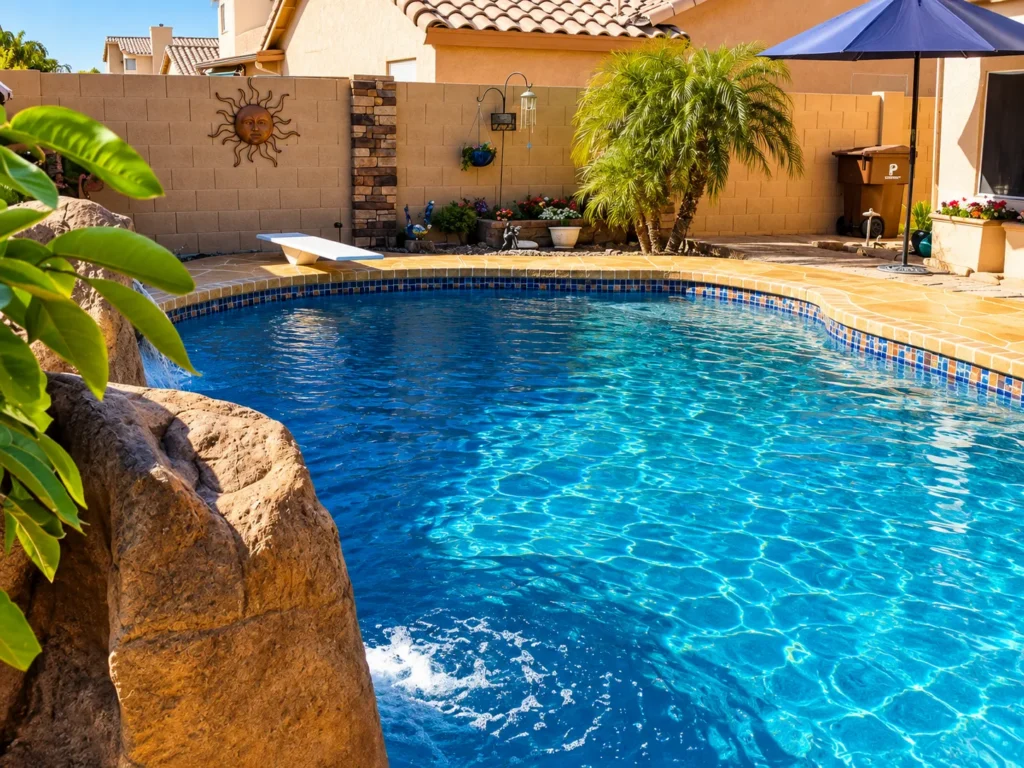
Caliche is a cemented layer of desert soil that can sit just below the surface, and some areas also have expansive clay. Our page for Glendale pool builders covers how hardpan, caliche and clay-heavy soils show up across that city. A builder who prices without asking about soil is guessing, and the guess usually comes back as a change order.
It’s why our own process as inground pool builders starts with a site analysis of terrain, access, utilities and conditions. Use the checklist below with every builder you interview.
| Arizona condition | What a great builder does | What to ask |
|---|---|---|
| Caliche and clay soils | Plans excavation and engineering around the soil | How will you handle caliche if you hit it? |
| Summer heat during the shell spray | Follows a hot-weather plan for spraying and curing | How do you cure the shell in July? |
| Monsoon storms | Slopes the deck and plans drainage away from the pool and house | Where does deck water go in a storm? |
| Long pump run times | Sizes efficient, compliant equipment for your pool | Which pump and filter, and why? |
| Permits and inspections | Pulls permits and coordinates every inspection | Who schedules inspections? |
Which License Should an Arizona Pool Builder Hold?
Inground pool builders in Arizona doing residential work should hold the Registrar of Contractors’ B-5 General Swimming Pool Contractor classification, or B-6 if they also install solar pool heating. Under Arizona’s contractor license rules, a general residential contractor has to subcontract pool work.
So look up the classification on the license, not just whether a license exists. Our guide on how to choose a pool builder covers the rest of the vetting, from references to the contract. The checks in this article pick up where that guide stops: on the job site.
How Do Great Builders Handle Gunite Pool Construction in Summer Heat?
Great builders treat gunite pool construction in summer as a planned operation, not business as usual. High air temperatures, low humidity and wind all speed up moisture loss in fresh concrete, so the crew needs a plan for when they spray, how they protect the shell and how they keep it curing.
The American Concrete Institute’s hot weather concreting guide covers those exact factors, along with the placing and curing practices that offset them. On gunite vs shotcrete, both are sprayed concrete, and the main difference is whether water joins the mix at the nozzle or at the plant. Our gunite pool construction schedule allows at least 10 to 14 days for the shell to cure before tile and coping.
What Should Your Builder Do About Monsoon Drainage?
Your builder should design pool deck drainage for monsoon storms from the start, with the deck sloped away from the pool and the house and a clear path for water to leave the yard. NWS Phoenix’s 2024 monsoon review notes that about half the region’s annual rain falls from June through September.
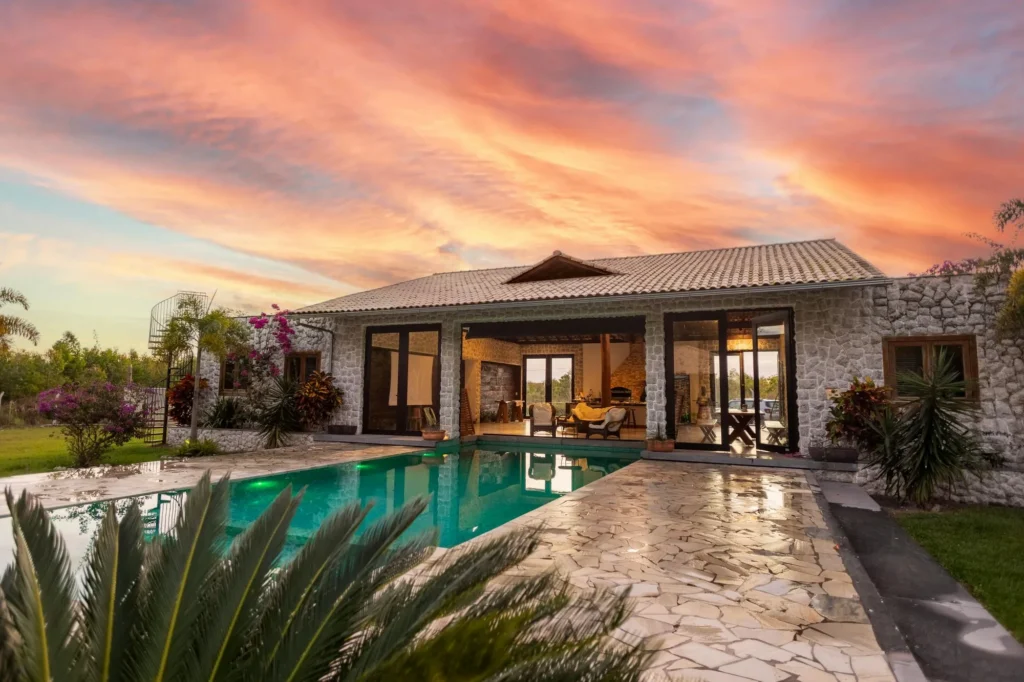
Ask where deck water goes, how the pool equipment pad sits against the grade, and what happens to the yard’s existing drainage once the pool takes up space. A pad set low can collect runoff, and a deck that drains toward the water washes dust and debris straight into the pool. These details rarely come up in a sales pitch, and they’re expensive to fix once the deck is poured.
How Should an Arizona Pool Be Equipped for Long Run Times?
An Arizona pool should be equipped for long run times with an efficient, properly sized pump and filter, because desert pools work hard through a long swim season. A variable speed pool pump can run slower for longer, and every new pool pump has to meet federal efficiency standards.
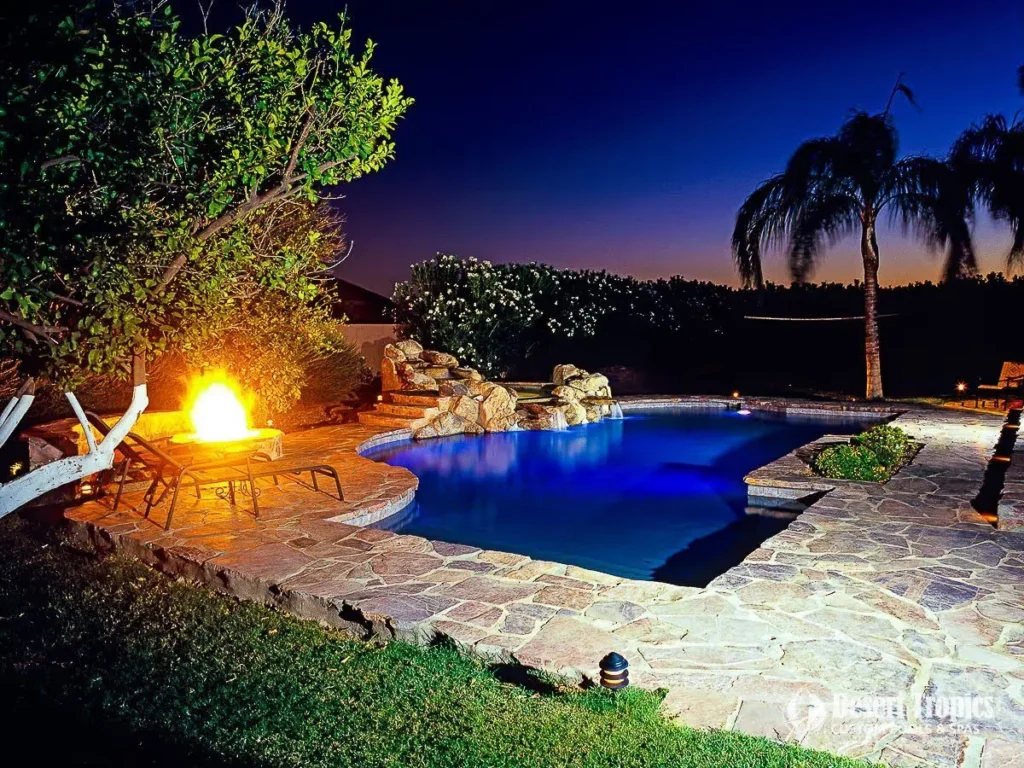
The Department of Energy’s pool pump rule requires dedicated-purpose pool pumps manufactured on or after July 19, 2021 to meet minimum efficiency standards. A great builder explains the pump, filter and automation they’re specifying and why they’re sized that way for your pool. Our builds finish with equipment startup and a final walkthrough, with the owner involved the whole way.
Inground Pool Builders in Arizona FAQs
What is the difference between gunite and shotcrete?
Gunite and shotcrete are both concrete sprayed onto a steel framework to form the pool shell. Gunite is a dry mix with water added at the nozzle, while shotcrete arrives already mixed with water. Either can produce a strong, long-lasting shell when the crew controls placement, heat and curing.
How much does an inground pool cost in Arizona?
Custom inground pools in the Phoenix area typically start around $60,000 and climb past $100,000 with premium features such as spas, water features and upgraded finishes. Soil conditions, site access and decking also move the number, which is why an estimate should follow a site visit rather than come before it.
How long does it take to build an inground pool in Arizona?
Our custom pools typically take 4 to 5 months from signed contract to swim day, including about 6 to 10 weeks of design and permitting before excavation. Caliche, hillside engineering and HOA review can stretch that range, so ask each builder what could change the schedule on your lot.
Does caliche make a pool more expensive?
It can. Caliche is hard, cemented soil, so digging through a thick layer takes heavier equipment and more time, and that cost depends on how much the excavator finds. A builder who asks about soil up front and explains how they’ll handle caliche gives you a more reliable estimate.
Should a pool builder handle permits and inspections?
Yes. Cities across the Valley require building permits for pools, along with plan review and inspections at set stages. A builder who pulls the permits and coordinates every inspection keeps the project moving and takes responsibility for meeting code. We manage permits and inspections as part of every project.
Choosing Among Inground Pool Builders in Arizona
The gap between good and great inground pool builders in Arizona shows up on the job site: how they read your soil, cure your shell in July, move monsoon water and size your equipment. Ask about each one before you sign.
Since 2001, we’ve built custom pools across North and West Phoenix with the owner involved in every project and one point of contact the whole way through. Call (602) 787-1603 or set a time to walk your site with us for a free design consultation.