
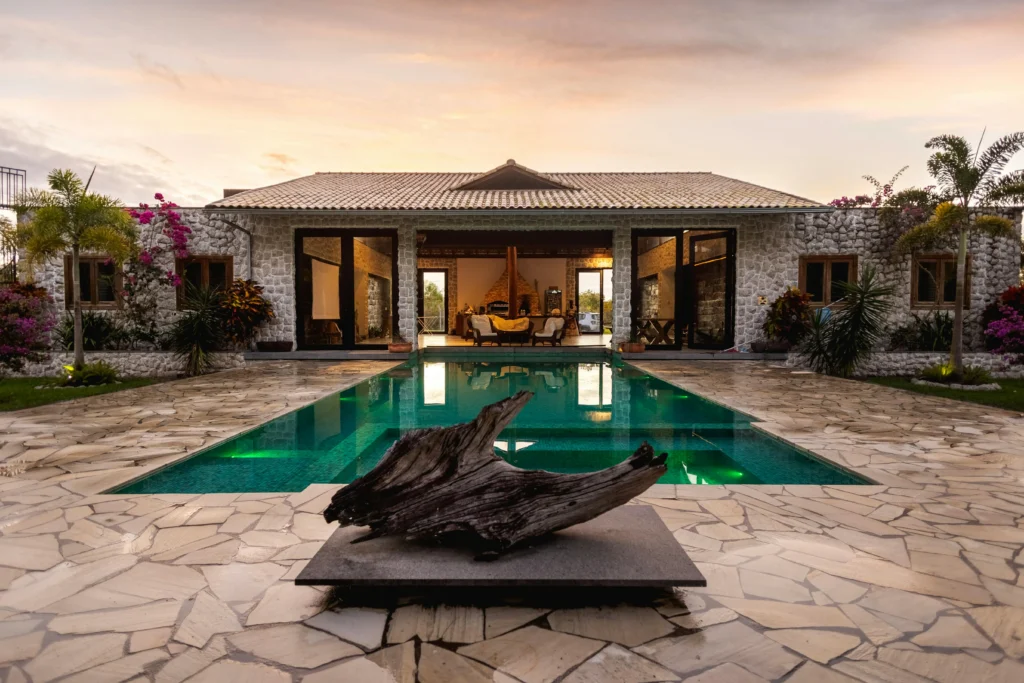
A pool rock waterfall looks natural only when it’s planned with the pool, not added after it. The ones that look wrong usually started as a pile of boulders set on a finished deck, with plumbing run around the edge and no thought to where people actually sit.
One of our recent Arizona builds paired a natural stone deck, rock falls and a fire pit. It’s a good example of how those three pieces share one stone palette, one set of sightlines and one equipment plan, and of what that means for design, materials, cost and upkeep.
Key Takeaways
- A pool rock waterfall pumps pool water up through rockwork so it spills back into the pool, and it looks best when the rock, deck and fire pit share one stone palette.
- Natural boulders and manufactured rock both work, but boulders weigh far more and need equipment access and a solid base.
- Light-colored, textured natural stone stays more comfortable underfoot in Arizona sun than dark or polished stone.
- Maricopa County bans wood fires on No Burn Days, so a gas fire pit is the more usable choice next to a Valley pool.
- Waterfalls raise evaporation, so put yours on a timer and run it when you’re outside.
What Is a Pool Rock Waterfall?
A pool rock waterfall is a water feature where the pump sends pool water up through a stack of boulders or cast rock, and the water spills over a lip back into the pool. It recirculates the pool’s own water, so it needs a return line, a valve to control flow and often a dedicated pump.
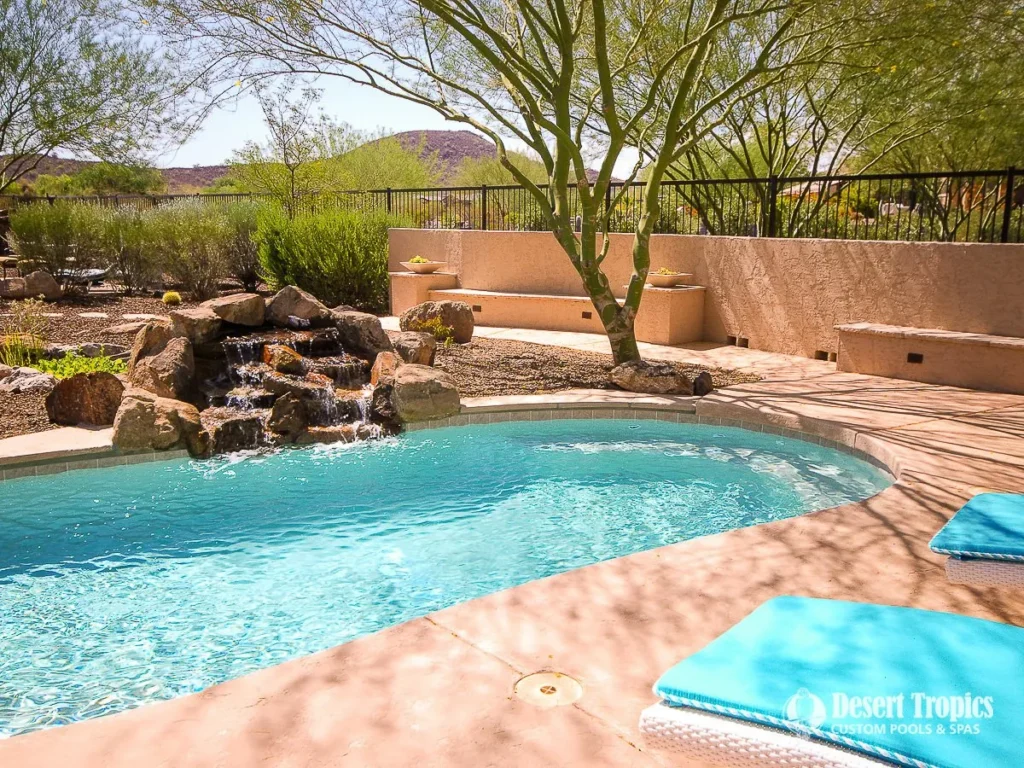
The bigger decision is the rock itself. A natural rock waterfall pool and one built from manufactured rock can both look right, but they get there in different ways, and the choice affects your budget, your yard access and the finished look. Rock falls sit alongside spillovers, grottos and fire bowls in the pool water features we design, and here’s how the two rock types compare.
| Factor | Natural boulders | Manufactured rock |
|---|---|---|
| Look | Every stone is one of a kind | Cast from molds and colored, so shapes can repeat |
| Weight | Heavy, usually set with machinery | Much lighter, which suits tight or raised areas |
| Site access | Needs a path for equipment into the yard | Pieces can often be carried in by hand |
| Best fit | Desert-style yards with room to work | Tight yards or where weight is a concern |
How Do a Rock Waterfall, Stone Deck and Fire Pit Work Together?
They work when the pool rock waterfall, the deck and the fire pit read as one design. That means one stone palette, a fire pit placed where you can see and hear the falls, and enough distance that splash and wind don’t reach the flame or the cushions.
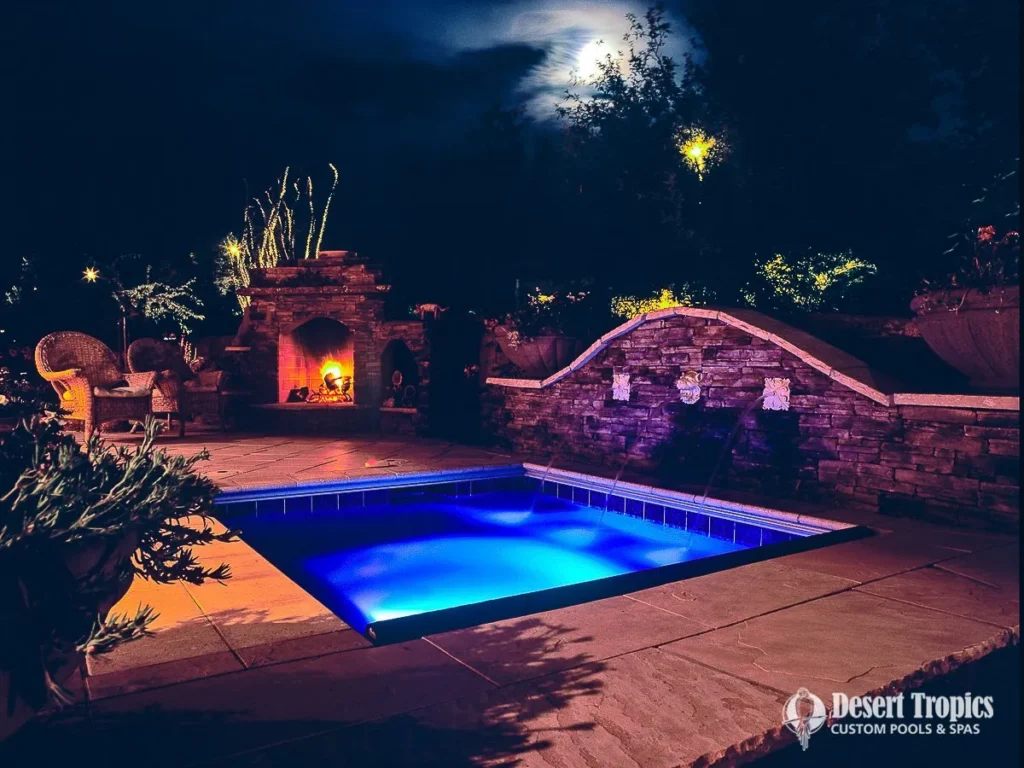
We start with sightlines. The falls should face the main seating area and the back windows, because that’s where you’ll look at them most. The fire pit then sits across the water or off to one side, so the evening view takes in both. It’s the same planning we use for outdoor living spaces like patios and outdoor kitchens, with 3D renderings so you can check the views before anything is built.
Site conditions matter too. On the rocky, caliche-heavy lots common in North Scottsdale, digging footings for heavy boulders takes more work, and HOA architectural review may weigh in on rockwork height. Our page for Scottsdale pool builders covers how those reviews work.
Which Stone Pool Deck Works in Arizona Heat?
A stone pool deck in Arizona should be light in color, textured on the surface and sealed for pool water. Light stone absorbs less sun, a tumbled or textured finish keeps grip when wet, and a sealer slows staining from chemicals and hard water. Travertine and flagstone are common choices for those reasons.
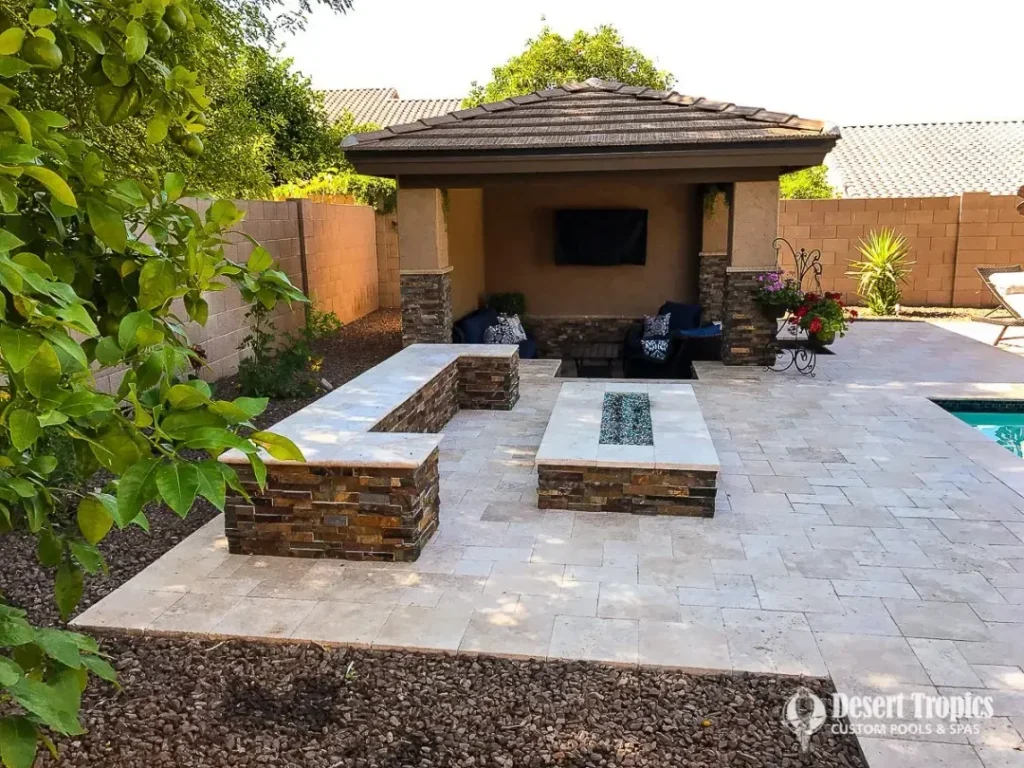
A natural stone pool deck also ties the rockwork to the house. When the deck and the boulders come from the same color family, the falls look like part of the yard instead of something sitting on top of it. Before you pick a stone, go over these with your builder:
- Color, since darker stone holds more heat under afternoon sun
- Finish, because polished stone turns slick when wet
- Thickness and base, which decide whether the deck cracks or shifts
- Sealing, and how often the stone will need it
- How the deck color matches the boulders in the falls
A flagstone pool deck suits a natural, desert-style yard, while travertine gives a cleaner edge. Both fall within the natural stone and travertine we recommend for Valley heat.
What Drives the Cost of a Pool With Waterfall and Fire Pit?
Rock type, waterfall size, the plumbing behind it and the fuel line for the fire pit drive most of the cost. Natural boulders cost more to move and set than manufactured rock, a taller falls needs more water flow, and a gas fire pit adds a line run and a permit.
For context, custom pools in the Phoenix area typically start around $60,000 and climb past $100,000 with premium features, and a pool with fire pit, rock falls and a stone deck adds to that baseline. Fuel choice matters more here than in most places. Maricopa County’s Air Quality Department prohibits wood burning and most outdoor fires on No Burn Days while still allowing gas, which makes gas the more usable choice in the Valley.
Gas and electrical work need permits and licensed trades. We handle permitting and inspections as part of the project, and you can check any contractor’s license with the Arizona Registrar of Contractors before you sign.
How Do You Run and Maintain a Pool Waterfall in the Desert?
Run a pool waterfall when you’re outside and keep it off the rest of the time. Moving water evaporates faster, and in Phoenix heat that adds up over a summer. A timer or an automation schedule makes this easy, and it also cuts the pump hours spent on the falls.
The EPA’s WaterSense guide to pool water efficiency notes that the turbulence from fountains and waterfalls raises evaporation, and recommends running them only when the pool is in use or on a timer. Hard water also leaves white scale where water runs over rock, so brush the lip and face of the falls as part of your routine. Our pool maintenance checklist covers the weekly and seasonal tasks for a Valley pool.
Pool Rock Waterfall FAQs
How much does a rock waterfall for a pool cost?
There isn’t one number, because rock type, height, width and plumbing set the price. Natural boulders cost more to deliver and set than manufactured rock, and a dedicated pump adds equipment. We price the falls as part of your project estimate, so you can compare a smaller and larger version side by side.
How do you add a rock waterfall to an existing pool?
You add it during a remodel, as long as there’s room at the deck edge for the rockwork and a path to run a return line from the equipment. It’s easiest when the deck is being redone at the same time, because the plumbing can run under new stone instead of through finished surfaces.
How long should you run a pool waterfall each day?
Run it only while you’re using the pool or sitting outside. A decorative waterfall isn’t needed for filtration, and the extra surface movement increases evaporation. A simple approach is to schedule it for evenings and weekends through your automation system or a timer, then switch it on manually for guests.
Can you have a wood fire pit by the pool in Maricopa County?
Yes, on days when burning is allowed. Maricopa County prohibits wood burning in outdoor fire pits on No Burn Days, which it declares during high-pollution periods in fall and winter. Gas fire pits are allowed on those days, so a gas line gives you a fire you can use whenever you want it.
Is a natural stone pool deck slippery?
Natural stone gets slippery only when the finish is wrong. Tumbled, textured or split-face stone like travertine and flagstone keeps grip when wet, while polished stone turns slick. Sealers protect against stains but don’t add traction, so choose the finish for grip and the sealer for protection.
Planning Your Pool Rock Waterfall
The real decision is whether to design your pool rock waterfall, stone deck and fire pit as one project or add them in stages. Designing them together avoids tearing up finished stone later and gives you one consistent look across the yard.
Since 2001, we’ve built custom pools across North and West Phoenix with the owner on site through the final walkthrough. Call (602) 787-1603 or set up a free design consultation and we’ll walk your yard and sketch where the falls and the fire should go.