
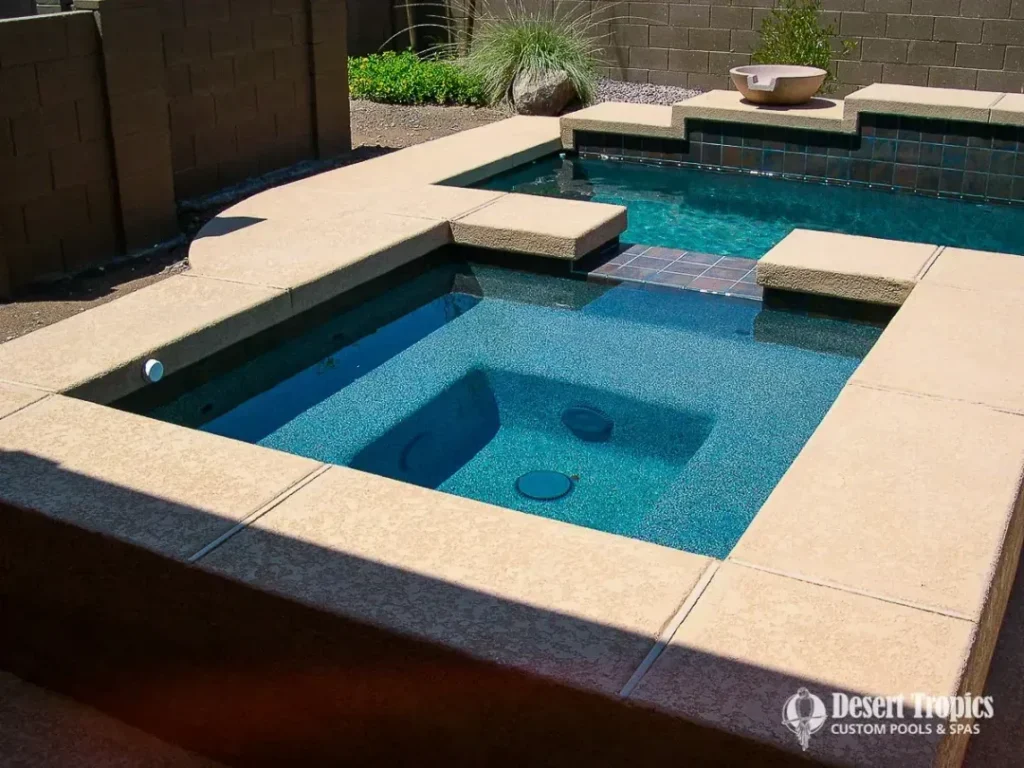
Two pools can look identical on the day they’re filled and tell completely different stories ten years later. One still looks crisp, holds water, and runs quietly. The other has hairline cracks, a rough surface, and an equipment pad that’s been patched twice. The difference almost always comes down to the quality of the pool construction, not the size of the budget or how flashy the features are.
A pool is basically a giant concrete shell holding tens of thousands of gallons of water in the ground, through 115-degree summers and chilly winter nights. What keeps it sound over the decades is a series of unglamorous decisions made during the build. Here’s what actually separates a pool that lasts from one that doesn’t.
Key Takeaways
- The structural shell matters most. Proper steel, soil prep, and a full gunite cure prevent the cracks that cut a pool’s life short.
- Quality plumbing and correctly sized equipment reduce strain and failures for decades, not just the first few seasons.
- Desert conditions like intense sun, hard water, and shifting soil call for materials chosen specifically for the climate.
- Rushed timelines are the enemy of durability. Curing and inspections take the time they take.
- The builder’s oversight often predicts long-term quality better than any single material on the spec sheet.
It Starts Underground, Not at the Surface
The parts of a pool you never see are the ones that decide how long it lasts. Before any concrete goes in, the crew shapes the hole, compacts the soil, and installs a grid of steel rebar that gives the shell its strength. In much of the Valley, that means accounting for caliche and soils that expand and contract as moisture changes. Skip that groundwork and no finish on earth will save the pool later.
What solid structural work looks like:
- Proper soil compaction and grading before any steel goes in
- A correctly spaced, tied rebar grid sized to the design
- Plumbing that’s pressure-tested before it gets buried
- Inspections signed off between stages, not waved through
This is the stage where durable pool construction is either won or lost. Everything after it is finish work sitting on top of that foundation, so it pays to get the whole pool building process right from the ground up.
The Shell: Gunite Done Right, and Given Time
The concrete shell is the heart of the pool, and it’s where patience pays off the most. Gunite or shotcrete gets sprayed at high pressure to form the structure, then it needs to cure slowly to reach full strength. That curing window is not a suggestion. Rush it, and you invite the hairline cracks that show up years down the road.
A good team treats this stage with respect.
Signs the shell was built to last:
- A dense, evenly applied gunite layer with no voids or thin spots
- Steps and benches hand-carved with care, not slapped together
- A cure period of roughly 10 to 14 days, kept damp in the heat
- No pressure to jump to the next stage before it’s ready
If you want to see how this fits into the bigger schedule, our build timeline breaks down why each stage takes the time it does. Cutting the cure short to hit a deadline is one of the most common shortcuts in swimming pool construction, and one of the most expensive to fix.
Materials That Actually Handle the Desert
Arizona is tough on building materials. Relentless UV fades and degrades cheap products, and our hard water leaves scale on surfaces and inside equipment. A pool built to last uses finishes, tile, decking, and equipment chosen specifically for these conditions, not whatever’s cheapest on the shelf.
Choices that hold up out here:
- Interior finishes like pebble or quartz that resist wear and staining
- Tile and coping rated for constant heat and direct sun
- Decking that stays cooler underfoot and resists cracking in the extremes
- Corrosion- and scale-resistant equipment built for hard water
Designing with the desert in mind also keeps a pool looking current instead of dated. A style that suits the climate tends to age gracefully for decades. If you’re still gathering ideas, our backyard pool inspiration page is a good place to see what that looks like.
The Builder Behind It All
Here’s the thing a spec sheet won’t tell you: the same materials in different hands produce very different pools. Craftsmanship, oversight, and honest communication are what turn good materials into a pool that lasts. A builder who’s on-site, catches problems early, and stands behind the work is worth more than any single upgrade.
What to look for in a builder:
- Years of local experience and a real portfolio you can see
- Direct communication, ideally with an owner who stays involved
- Realistic timelines instead of too-good-to-be-true promises
- A clear warranty and a plan for support after the fill
This is exactly why custom pool construction and high-quality pool construction tend to go hand in hand. A builder who tailors the pool to your yard is usually the same one sweating the details that make it last. For a fuller look at what the whole thing involves, our guide to building a pool in Arizona covers what to expect from start to finish.
Build Once, Enjoy for Decades
A pool is one of the bigger investments you’ll make in your home, and it should reward you for twenty years or more, not start needing repairs by year five. The features get all the attention, but the structure, the materials, and the people building it are what quietly decide how long you’ll enjoy it.
If you’re planning a build and want it done to last, chat with the team about your yard, your soil, and the choices that protect your investment for the long haul. We’ve been building custom pools across North and West Phoenix since 2001, and we’d rather build you one pool that lasts than sell you two.